


homestudy quiz

what's your study character?

Eight quick questions about how you actually study. You get one of six characters, your colour, and three study techniques with real research behind them.

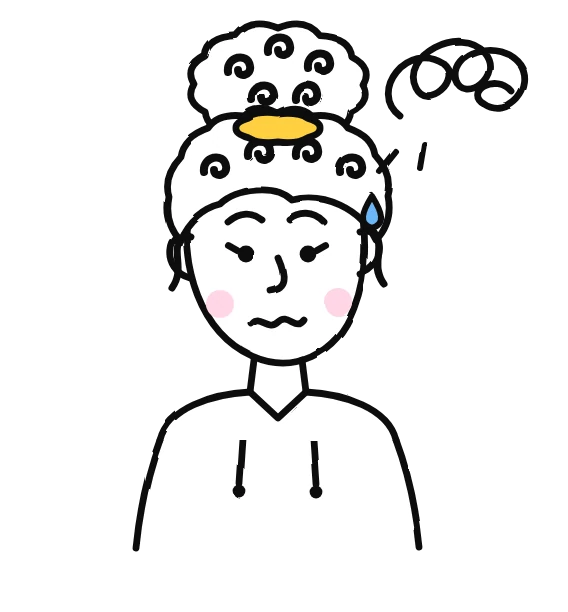
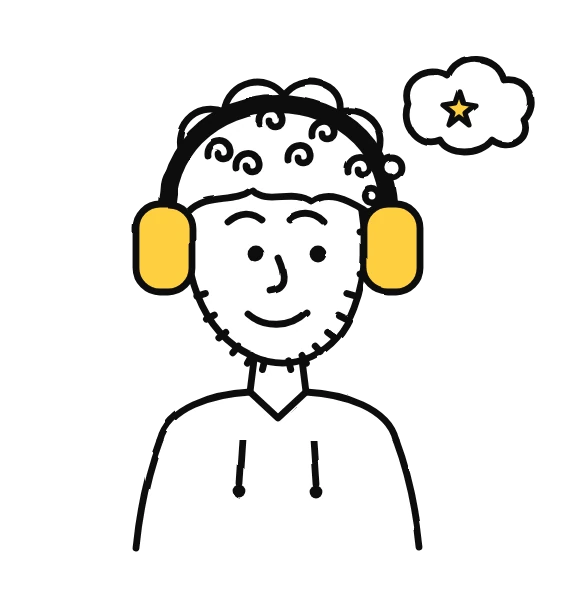
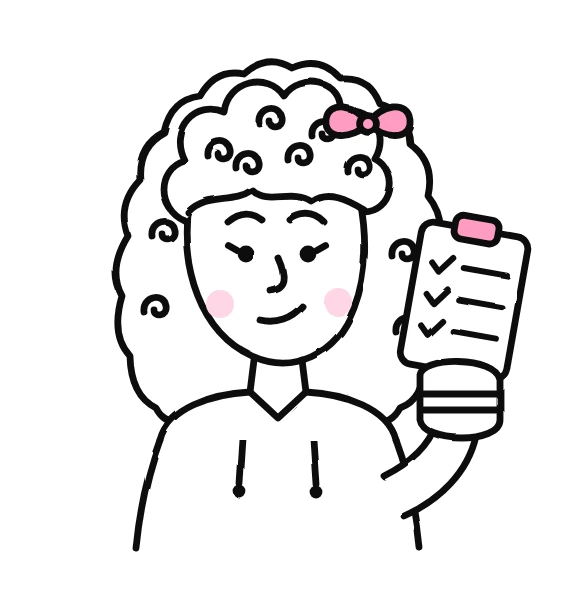
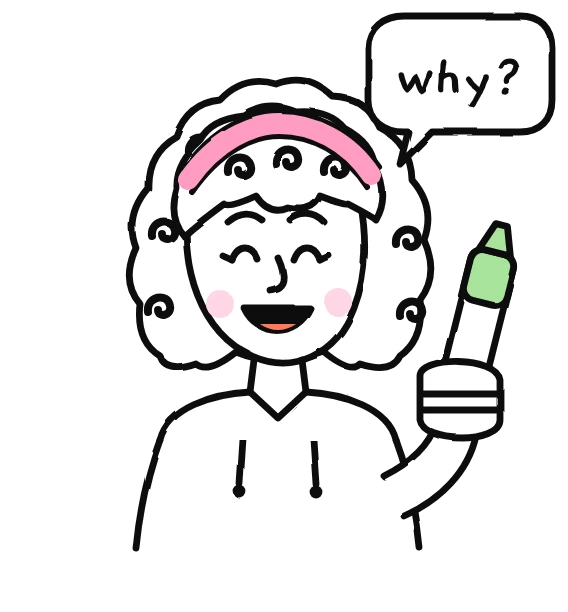
the sprinterthe scribethe overthinkerthe daydreamerthe perfectionistthe explainer

ready?

8 questions, about a minute. Pick the answer that sounds most like you, not the one you wish was true. Nothing is saved or sent anywhere.

two moves for every character

Whatever you got, start with these two. A big review of ten popular study techniques rated only these two high utility, because they helped learners of different ages and abilities, across lots of subjects and kinds of tests (Dunlosky et al., 2013).

test yourself

Flashcards, practice questions, blank-page recall. Anything that makes you pull the answer out of your head (Dunlosky et al., 2013; Adesope et al., 2017).

space it out

Short sessions spread over days and weeks beat one long session, for the same total time (Dunlosky et al., 2013; Cepeda et al., 2006).

meet all six

Most people are a mix. Tap any character to see their habit, the research and their three techniques.

is this a personality test?

Not quite, and that's on purpose. The popular idea that you learn best when teaching matches your "learning style" has almost no good evidence behind it (Pashler et al., 2008). The techniques that work best, like testing yourself and spacing your study out, help pretty much everyone (Dunlosky et al., 2013).

What personality does change is what gets in your way. That's why every character comes with a personality link: procrastination goes with lower conscientiousness (Steel, 2007), test anxiety with neuroticism (Chamorro-Premuzic et al., 2008), and a deep, why-first approach to learning with openness (Chamorro-Premuzic & Furnham, 2009). Conscientiousness also predicts grades overall (Poropat, 2009). Some of the clearer predictors of university GPA are about how you work, though, like effort regulation, which means sticking with work when it gets boring or hard (Richardson et al., 2012). How you work can change, so the quiz asks about your study habits.

Each character is built around one study habit that researchers have looked at closely: cramming, rereading, test anxiety, distraction, perfectionism, and learning by explaining. Every claim links to a peer-reviewed study or review, listed below, so you can check it yourself.

Eight questions can't measure your personality, so your result is a starting point, not a label. If you're between two characters, try the techniques from both. And this isn't medical advice: if anxiety, focus or sleep is affecting your daily life, talk to your campus counselling service or a doctor.

references

  1. Adesope, O. O., Trevisan, D. A., & Sundararajan, N. (2017). Rethinking the use of tests: A meta-analysis of practice testing. Review of Educational Research, 87, 659-701. doi.org/10.3102/0034654316689306
  2. Agarwal, P. K., D'Antonio, L., Roediger, H. L., McDermott, K. B., & McDaniel, M. A. (2014). Classroom-based programs of retrieval practice reduce middle school and high school students' test anxiety. Journal of Applied Research in Memory and Cognition, 3, 131-139. doi.org/10.1016/j.jarmac.2014.07.002
  3. Bisra, K., Liu, Q., Nesbit, J. C., Salimi, F., & Winne, P. H. (2018). Inducing self-explanation: A meta-analysis. Educational Psychology Review, 30, 703-725. doi.org/10.1007/s10648-018-9434-x
  4. Biwer, F., Wiradhany, W., oude Egbrink, M. G. A., & de Bruin, A. B. H. (2023). Understanding effort regulation: Comparing 'Pomodoro' breaks and self-regulated breaks. British Journal of Educational Psychology, 93(S2), 353-367. doi.org/10.1111/bjep.12593
  5. Bjork, R. A., Dunlosky, J., & Kornell, N. (2013). Self-regulated learning: Beliefs, techniques, and illusions. Annual Review of Psychology, 64, 417-444. doi.org/10.1146/annurev-psych-113011-143823
  6. Brady, S. T., Hard, B. M., & Gross, J. J. (2018). Reappraising test anxiety increases academic performance of first-year college students. Journal of Educational Psychology, 110, 395-406. doi.org/10.1037/edu0000219
  7. Brunmair, M., & Richter, T. (2019). Similarity matters: A meta-analysis of interleaved learning and its moderators. Psychological Bulletin, 145, 1029-1052. doi.org/10.1037/bul0000209
  8. Cepeda, N. J., Pashler, H., Vul, E., Wixted, J. T., & Rohrer, D. (2006). Distributed practice in verbal recall tasks: A review and quantitative synthesis. Psychological Bulletin, 132, 354-380. doi.org/10.1037/0033-2909.132.3.354
  9. Chamorro-Premuzic, T., & Furnham, A. (2009). Mainly openness: The relationship between the Big Five personality traits and learning approaches. Learning and Individual Differences, 19, 524-529. doi.org/10.1016/j.lindif.2009.06.004
  10. Chamorro-Premuzic, T., Ahmetoglu, G., & Furnham, A. (2008). Little more than personality: Dispositional determinants of test anxiety (the Big Five, core self-evaluations, and self-assessed intelligence). Learning and Individual Differences, 18, 258-263. doi.org/10.1016/j.lindif.2007.09.002
  11. Dunlosky, J., Rawson, K. A., Marsh, E. J., Nathan, M. J., & Willingham, D. T. (2013). Improving students' learning with effective learning techniques: Promising directions from cognitive and educational psychology. Psychological Science in the Public Interest, 14, 4-58. doi.org/10.1177/1529100612453266
  12. Fiorella, L., & Mayer, R. E. (2013). The relative benefits of learning by teaching and teaching expectancy. Contemporary Educational Psychology, 38, 281-288. doi.org/10.1016/j.cedpsych.2013.06.001
  13. Glass, A. L., & Kang, M. (2019). Dividing attention in the classroom reduces exam performance. Educational Psychology, 39, 395-408. doi.org/10.1080/01443410.2018.1489046
  14. Gollwitzer, P. M., & Sheeran, P. (2006). Implementation intentions and goal achievement: A meta-analysis of effects and processes. Advances in Experimental Social Psychology, 38, 69-119. doi.org/10.1016/S0065-2601(06)38002-1
  15. Harkin, B., Webb, T. L., Chang, B. P. I., Prestwich, A., Conner, M., Kellar, I., Benn, Y., & Sheeran, P. (2016). Does monitoring goal progress promote goal attainment? A meta-analysis of the experimental evidence. Psychological Bulletin, 142, 198-229. doi.org/10.1037/bul0000025
  16. Hartwig, M. K., & Dunlosky, J. (2012). Study strategies of college students: Are self-testing and scheduling related to achievement? Psychonomic Bulletin & Review, 19, 126-134. doi.org/10.3758/s13423-011-0181-y
  17. Jamieson, J. P., Peters, B. J., Greenwood, E. J., & Altose, A. J. (2016). Reappraising stress arousal improves performance and reduces evaluation anxiety in classroom exam situations. Social Psychological and Personality Science, 7, 579-587. doi.org/10.1177/1948550616644656
  18. Karpicke, J. D., & Blunt, J. R. (2011). Retrieval practice produces more learning than elaborative studying with concept mapping. Science, 331, 772-775. doi.org/10.1126/science.1199327
  19. Karpicke, J. D., Butler, A. C., & Roediger, H. L. (2009). Metacognitive strategies in student learning: Do students practise retrieval when they study on their own? Memory, 17, 471-479. doi.org/10.1080/09658210802647009
  20. Koh, A. W. L., Lee, S. C., & Lim, S. W. H. (2018). The learning benefits of teaching: A retrieval practice hypothesis. Applied Cognitive Psychology, 32, 401-410. doi.org/10.1002/acp.3410
  21. Kornell, N. (2009). Optimising learning using flashcards: Spacing is more effective than cramming. Applied Cognitive Psychology, 23, 1297-1317. doi.org/10.1002/acp.1537
  22. Okano, K., Kaczmarzyk, J. R., Dave, N., Gabrieli, J. D. E., & Grossman, J. C. (2019). Sleep quality, duration, and consistency are associated with better academic performance in college students. npj Science of Learning, 4, 16. doi.org/10.1038/s41539-019-0055-z
  23. Pashler, H., McDaniel, M., Rohrer, D., & Bjork, R. (2008). Learning styles: Concepts and evidence. Psychological Science in the Public Interest, 9, 105-119. doi.org/10.1111/j.1539-6053.2009.01038.x
  24. Poropat, A. E. (2009). A meta-analysis of the five-factor model of personality and academic performance. Psychological Bulletin, 135, 322-338. doi.org/10.1037/a0014996
  25. Ramirez, G., & Beilock, S. L. (2011). Writing about testing worries boosts exam performance in the classroom. Science, 331, 211-213. doi.org/10.1126/science.1199427
  26. Rawson, K. A., & Dunlosky, J. (2011). Optimizing schedules of retrieval practice for durable and efficient learning: How much is enough? Journal of Experimental Psychology: General, 140, 283-302. doi.org/10.1037/a0023956
  27. Richardson, M., Abraham, C., & Bond, R. (2012). Psychological correlates of university students' academic performance: A systematic review and meta-analysis. Psychological Bulletin, 138, 353-387. doi.org/10.1037/a0026838
  28. Roediger, H. L., & Karpicke, J. D. (2006). Test-enhanced learning: Taking memory tests improves long-term retention. Psychological Science, 17, 249-255. doi.org/10.1111/j.1467-9280.2006.01693.x
  29. Rohrer, D., & Taylor, K. (2007). The shuffling of mathematics problems improves learning. Instructional Science, 35, 481-498. doi.org/10.1007/s11251-007-9015-8
  30. Rowland, C. A. (2014). The effect of testing versus restudy on retention: A meta-analytic review of the testing effect. Psychological Bulletin, 140, 1432-1463. doi.org/10.1037/a0037559
  31. Sana, F., Weston, T., & Cepeda, N. J. (2013). Laptop multitasking hinders classroom learning for both users and nearby peers. Computers & Education, 62, 24-31. doi.org/10.1016/j.compedu.2012.10.003
  32. Sanbonmatsu, D. M., Strayer, D. L., Medeiros-Ward, N., & Watson, J. M. (2013). Who multi-tasks and why? Multi-tasking ability, perceived multi-tasking ability, impulsivity, and sensation seeking. PLoS ONE, 8, e54402. doi.org/10.1371/journal.pone.0054402
  33. Sirois, F. M., Molnar, D. S., & Hirsch, J. K. (2017). A meta-analytic and conceptual update on the associations between procrastination and multidimensional perfectionism. European Journal of Personality, 31, 137-159. doi.org/10.1002/per.2098
  34. Smith, A. M., Floerke, V. A., & Thomas, A. K. (2016). Retrieval practice protects memory against acute stress. Science, 354, 1046-1048. doi.org/10.1126/science.aah5067
  35. Steel, P. (2007). The nature of procrastination: A meta-analytic and theoretical review of quintessential self-regulatory failure. Psychological Bulletin, 133, 65-94. doi.org/10.1037/0033-2909.133.1.65
  36. von der Embse, N., Jester, D., Roy, D., & Post, J. (2018). Test anxiety effects, predictors, and correlates: A 30-year meta-analytic review. Journal of Affective Disorders, 227, 483-493. doi.org/10.1016/j.jad.2017.11.048
  37. Wohl, M. J. A., Pychyl, T. A., & Bennett, S. H. (2010). I forgive myself, now I can study: How self-forgiveness for procrastinating can reduce future procrastination. Personality and Individual Differences, 48, 803-808. doi.org/10.1016/j.paid.2010.01.029

want a plan built around your character?

Bring your result to a free 20-minute diagnostic. We'll look at your courses and turn your three techniques into a weekly plan you can actually stick to.